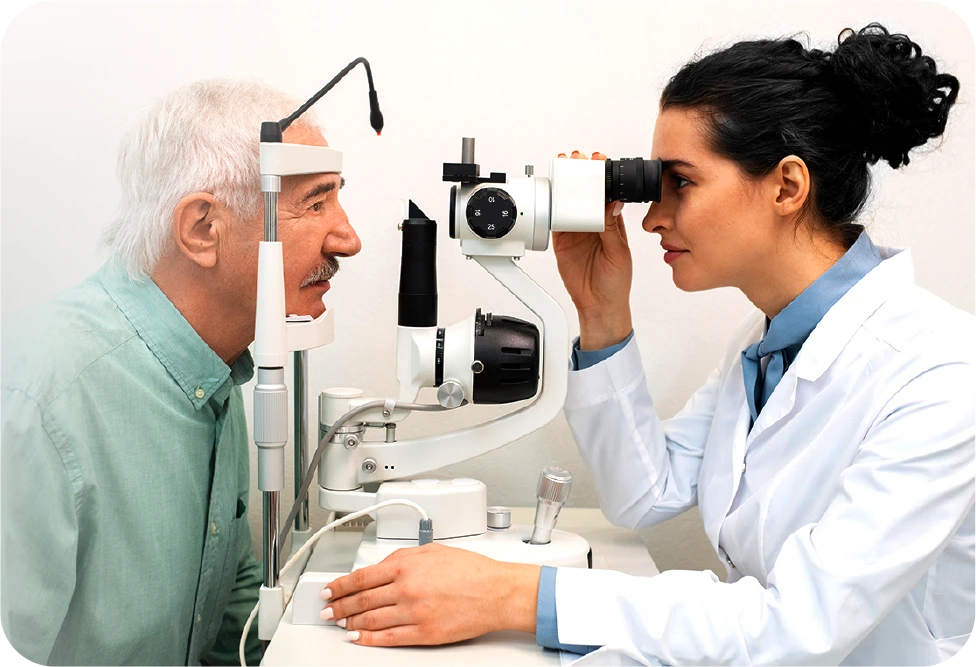
Diagnosing glaucoma isn’t just about checking eye pressure. While high intraocular pressure is a key factor, it alone doesn’t confirm the disease some people with high pressure never develop glaucoma, and many with glaucoma have normal pressure.
To make an accurate diagnosis, your ophthalmologist will look closely at your optic nerve, measure your eye pressure, and assess your vision to see if any damage has occurred
Tonometry
(Measuring Intraocular Pressure)2,3
This test checks the internal pressure of your eye, known as intraocular pressure (IOP), which can indicate the risk of glaucoma.
OPHTHALMOSCOPY
(Optic Nerve Assessment)4,5,6,7
Also known as a dilated eye exam, this involves inspecting the optic nerve's shape and color at the
back of the eye for any signs of damage.
PERIMETRY
(Visual Field Analysis)8,9,10,11
This test maps your entire field of vision to detect any blind spots or peripheral vision loss, which are common signs of glaucoma.
GONIOSCOPY
(Drainage Angle Evaluation)12
This procedure examines the angle where the iris and cornea meet, helping the doctor determine whether the eye’s drainage system is functioning properly.
PACHYMETRY
(Corneal Thickness Measurement)4,5,6,7
This test measures the thickness of your cornea, which can influence eye pressure readings and affect glaucoma risk assessment.