


Diagnosing glaucoma isn’t just about checking eye pressure. While high intraocular pressure is a key factor, it alone doesn’t confirm the disease some people with high pressure never develop glaucoma, and many with glaucoma have normal pressure.
To make an accurate diagnosis, your ophthalmologist will look closely at your optic nerve, measure your eye pressure, and assess your vision to see if any damage has occurred
An eye care specialist will review your medical history and perform a comprehensive eye examination.
This may include a series of diagnostic tests, such as:
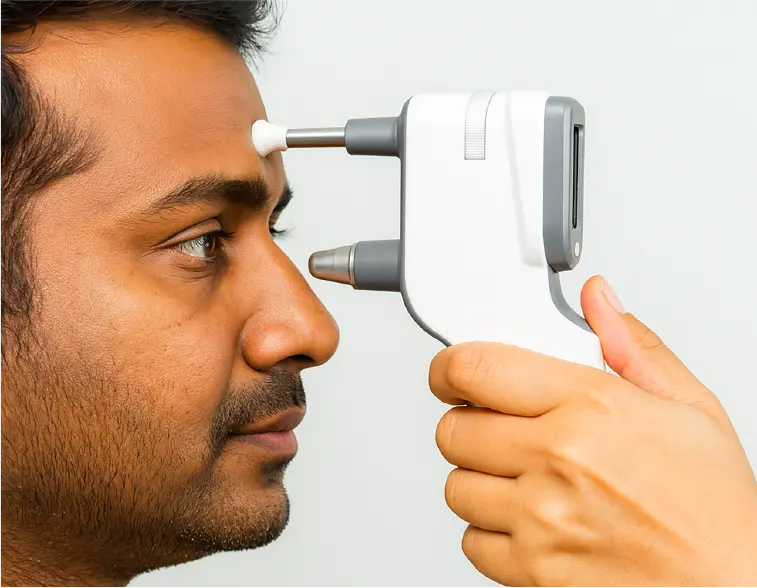
Tonometry is a key test used to measure intraocular pressure (IOP), which, when elevated above 21 mmHg, is a major risk factor for glaucoma a progressive eye disease that can lead to permanent vision loss. The goal is to monitor and manage IOP to prevent or slow glaucoma progression through timely treatment such as eye drops, laser therapy, or surgery.
During the test, the eye is numbed with drops, sometimes with a dye for better visibility, and the pressure is measured using a gentle touch or a puff of air.
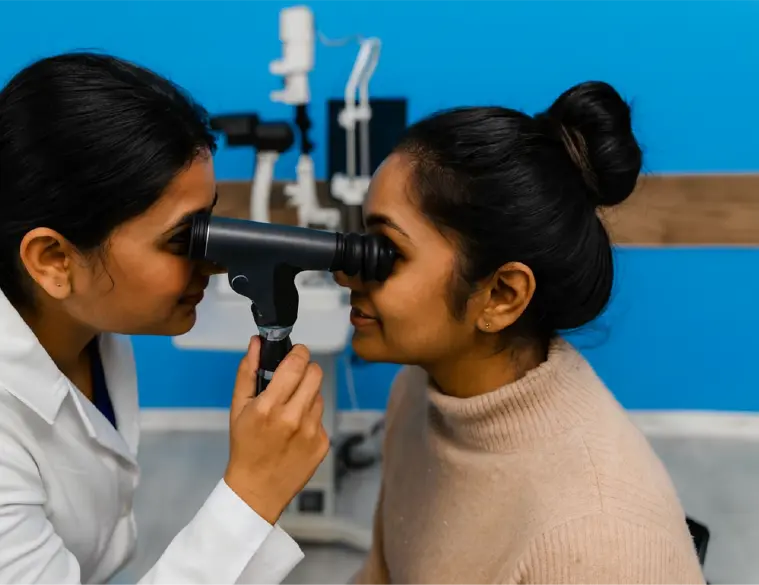
Ophthalmoscopy, or fundoscopy, is a test that allows doctors to examine the inner back part of the eye (the fundus) to detect various eye conditions. Using an ophthalmoscope, which shines light and magnifies internal structures, the doctor can view the retina, optic nerve, choroid, and blood vessels.
Dilating drops are used to widen the pupil for a clearer view. The doctor then checks the optic nerve for signs of glaucoma related damage and examines the retina and blood vessels for any abnormalities. Though the bright light may cause slight discomfort, the procedure is safe, quick, and painless and usually takes 5 to 10 minutes.
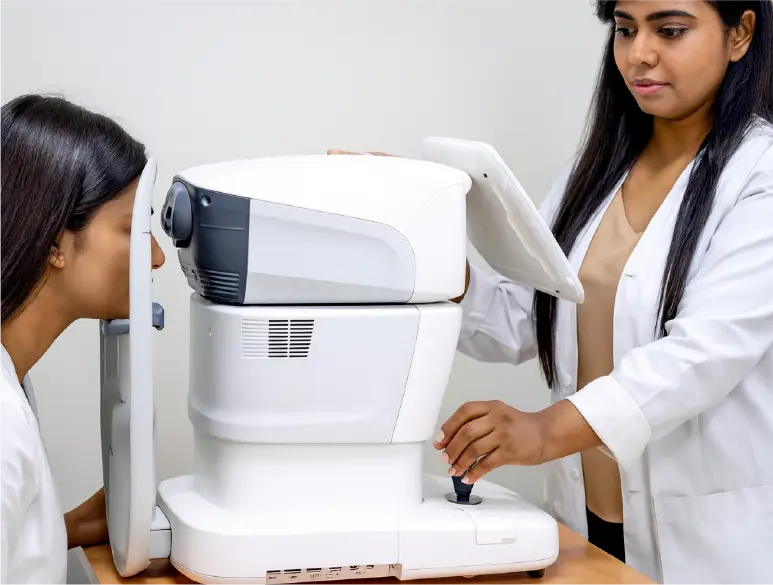
Loss of peripheral vision is a common symptom of glaucoma and can be detected using a Perimetry test.
Perimetry, or a visual field test, assesses how well you can see across your entire field of vision both central and side vision. During the test, you’ll focus on a central point on a screen while small lights flash in various areas. Each time you see a light, you press a button, helping the doctor map how much of your vision is working properly.
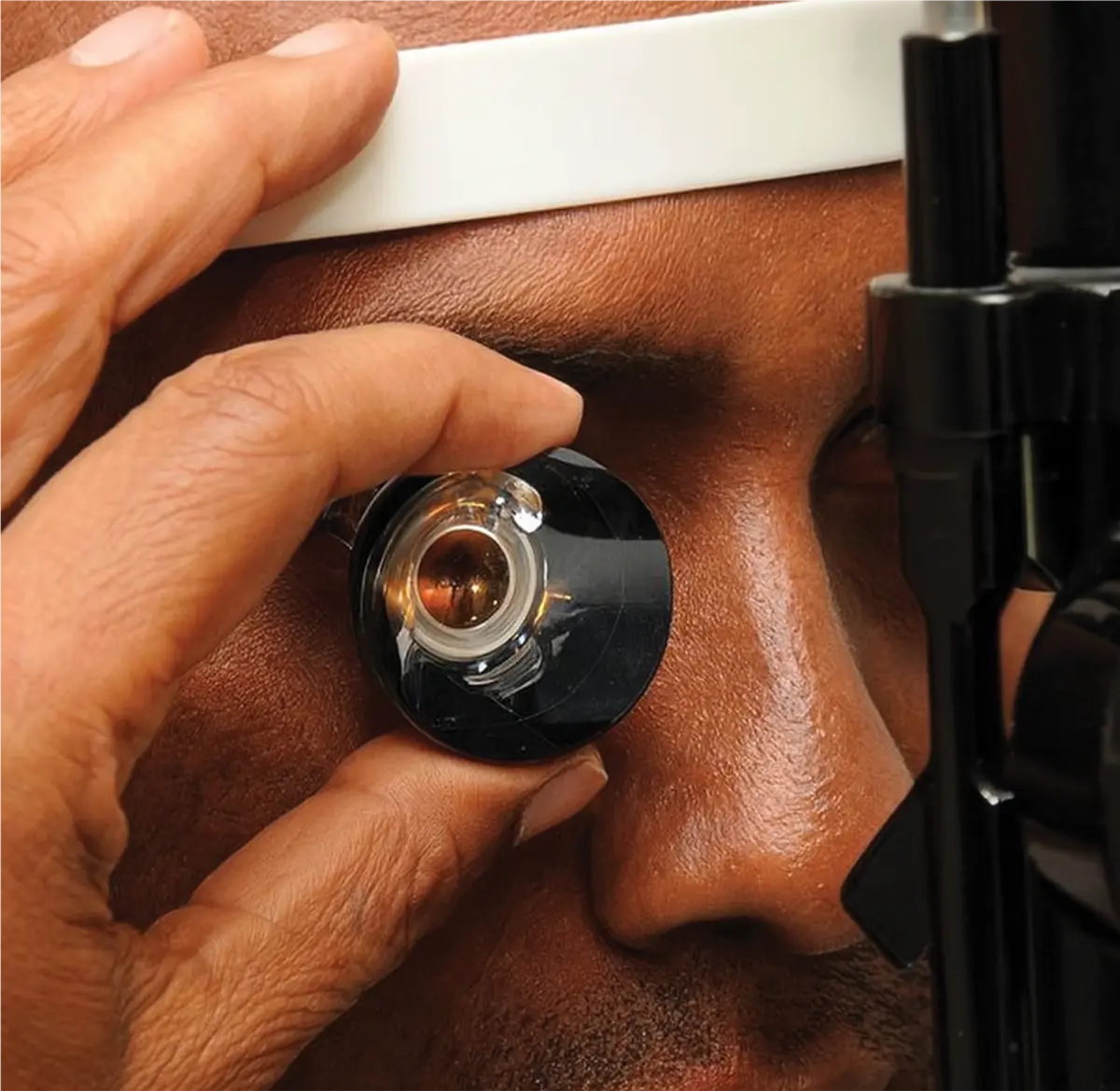
Gonioscopy is a test used to examine the eye’s drainage angle, where fluid exits the eye. Since the eye continually produces fluid, it’s essential that it drains properly through this angle. This test helps determine if high eye pressure is due to a blocked or closed angle (angle-closure glaucoma) or an open but poorly functioning angle (open-angle glaucoma), which is crucial for deciding treatment.
During the procedure, numbing drops are applied, and a special mirrored lens is gently placed on the eye for examination
References: 1. Nolan W, Onakoya A. Gonioscopy skills and techniques. Community Eye Health. 2021;34(112):40-42. Epub 2022 Jan 31. PMID: 35210702; PMCID: PMC8862628.
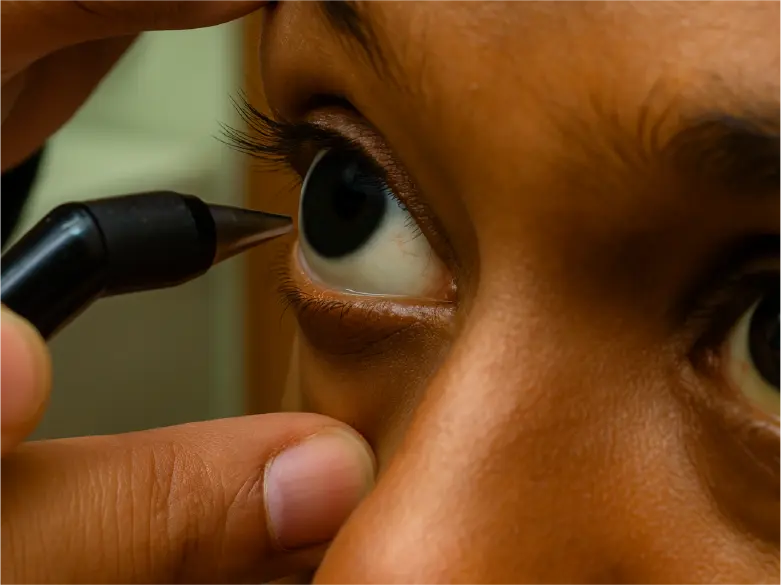
Corneal thickness is an important risk factor for glaucoma, as thinner cornea can result in higher intraocular pressure readings, increasing the risk of the disease. To assess this, a simple and painless test called Pachymetry is used.
Pachymetry is typically done with an ultrasound device or laser scanner that uses sound waves or light to measure corneal thickness at specific points. Knowing your corneal thickness helps your eye doctor make more accurate decisions for early detection and better management of glaucoma.